Heart Valve Conditions and Treatment Options
The Valve Clinic provides information and clinical services relating to heart valve conditions and catheter-based treatment approaches for selected patients.
Understanding TAVI,
TEER and TMVR
Understanding Heart Valve Treatment Options
Explore Heart Valve Conditions
Navigate directly to the procedure that matters to your family.
About Second Medical Opinions Understand the Second Opinion Process
Structural Heart Care and Treatment Information
Hospitals and Clinical Facilities


We're all at different stages of our journey
What's most important to you?
Symptom
Procedure
Features
Heart Valve Treatment Options
Treatment options depend on the type and severity of heart valve disease, symptoms, valve anatomy and overall health. Surgical and catheter-based approaches have different indications, benefits and risks.

TAVI / TAVR — Aortic Valve Implantation
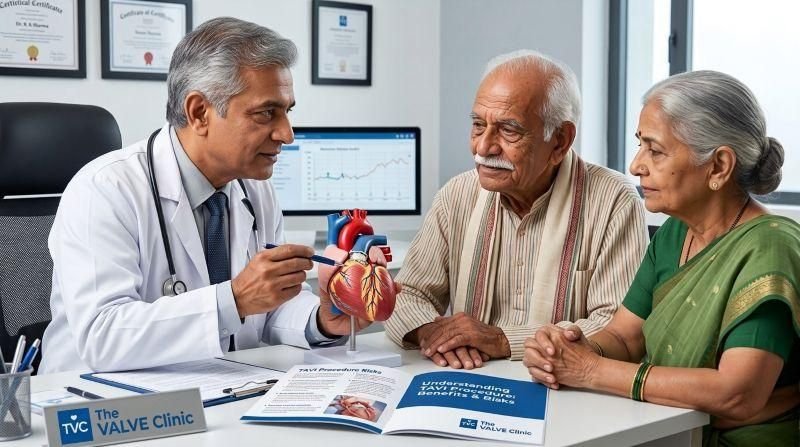
TAVI is a catheter-based procedure used to replace the aortic valve in selected patients with severe aortic stenosis. Eligibility is determined through clinical and anatomical evaluation.
Learn about TAVI

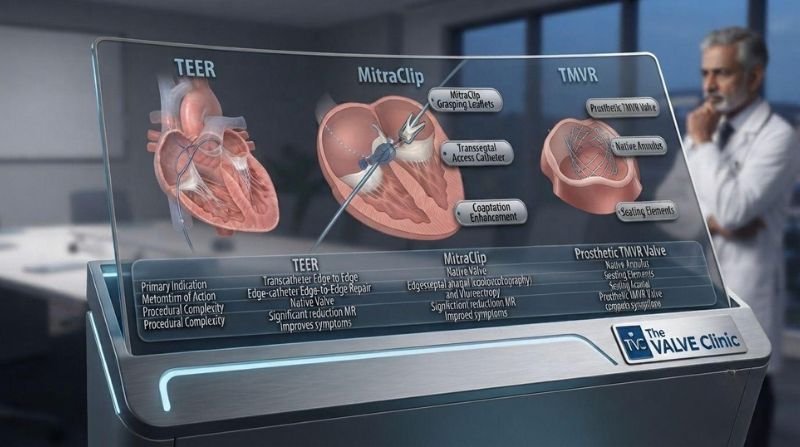
TEER — Transcatheter Edge-to-Edge Repair
TEER is a catheter-based procedure intended to reduce mitral regurgitation in selected patients. Suitability depends on valve anatomy, symptoms and clinical findings.
Learn about TEER

TMVR — Transcatheter Mitral Valve Replacement
TMVR involves implantation of a replacement mitral valve using a catheter-based approach in selected clinical situations. Eligibility depends on detailed anatomical and clinical assessment.
Learn about TMVR

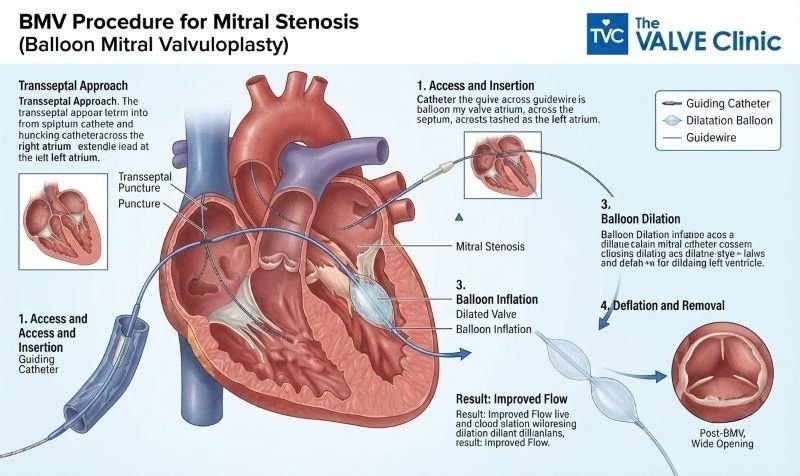
BMV — Balloon Mitral Valvotomy
Widening a narrowed mitral valve using a balloon catheter. BMV uses a balloon catheter to widen a narrowed mitral valve in selected patients with suitable valve anatomy
Learn about BMVHow Is the Appropriate Treatment Determined?
Treatment recommendations are based on medical history, symptoms, imaging findings, valve anatomy and relevant clinical investigations.
Understanding Your Heart Valve Evaluation
Understanding Your Diagnosis — Heart valve assessment may involve clinical examination and echocardiography
Understanding Available Treatments — Treatment may involve monitoring, medication, surgery or catheter-based intervention.
Recognising Common Symptoms — Breathlessness, fatigue, chest discomfort, dizziness or reduced activity may require evaluation.
Clinical Review and Evaluation — Medical records and examination findings inform treatment assessment.
Multidisciplinary Assessment — Complex cases may involve several relevant clinicians.
Dr. Phatarpekar is a Structural and Interventional Cardiologist with a focused interest in advanced structural heart procedures, bringing over 15 years of dedicated experience to patient care and complex valve interventions.
As the Founder of The Valve Clinic, his practice focuses on the precise evaluation, planning, and catheter-based treatment of structural heart and heart valve conditions, combining technical excellence with honest communication.
Areas of Clinical Practice
Research and Academic Activities — list independently verified studies and roles in full profile
World-class treatment without the wait
74% of people with symptoms remain undiagnosed, according to The Valve Clinic.
How Heart Valve Assessment and Care May Proceed
Patients or family members may contact the clinic for consultation information
Relevant medical reports may be reviewed before or during consultation.
A qualified practitioner reviews symptoms, history and investigations.
Where appropriate, relevant specialists discuss findings and options.
Options may include monitoring, medical therapy, intervention or surgery; not every patient needs a procedure. t
Monitoring and investigations depend on individual needs.
No referral needed. You can contact us directly — as a patient, family member, or GP referring on behalf of a patient.
Factors Considered During Treatment Planning
Every patient's story is different. These are a few, shared with permission, to help you understand what the journey feels like.
My father was 78 and three different hospitals told us open-heart surgery was too risky at his age. Dr. Phatarpekar assessed him and said TAVI was possible. The procedure was done in two hours. He walked the next day. We still can't believe it.
My mother had been breathless for two years. After MitraClip she climbed stairs again within a month. What we valued most was how plainly everything was explained — we never felt rushed or confused.
We came for a second opinion after being advised open surgery. The team reviewed everything and within a week had a plan for TAVI. Six months later my husband is playing cricket with the grandchildren. This team gave us our life back.
Understanding Your Heart
Valve Treatment Options
A second medical opinion may provide an additional review of the diagnosis, investigation findings and available treatment options. Surgery, catheter-based intervention, medication or monitoring may be appropriate.
Frequently Asked Questions About Heart Valve Care
Consultation and Contact Information
Enquiries are reviewed during clinic hours. Response times may vary. Patients may contact the clinic directly for consultation informion. Please refer to our Privacy Policy for information about personal-data handling.
Contact Us WhatsApp EnquiryWe're more than just a test
What is TAVR ?
What is TAVR ?
What is TAVR ?
What is TAVR ?